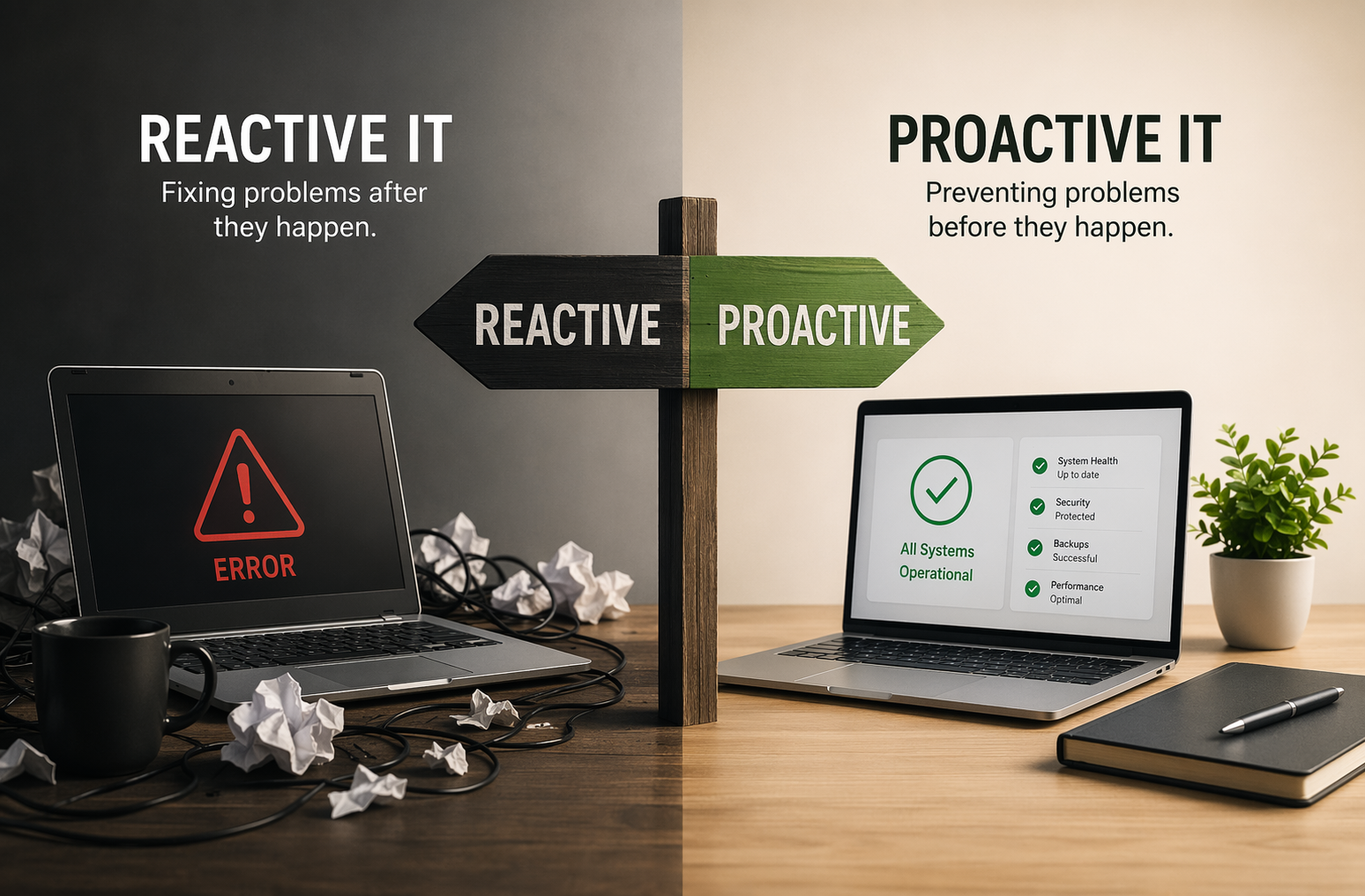
Many businesses still operate in reactive mode—fixing issues only after something breaks. While this approach may seem cost-effective at first, it often leads to higher expenses, unexpected downtime, and avoidable stress.
The truth? Waiting costs more than preventing.
1. The Problem with Reactive IT
Reactive IT means waiting until something goes wrong before taking action. This often results in:
- Unexpected downtime
- Emergency fixes at premium costs
- Disruptions to your team’s productivity
And these problems usually happen at the worst possible time—when your business needs to be running smoothly.
2. The Real Cost of Downtime
Downtime doesn’t just affect your systems—it impacts your entire business:
- Employee productivity drops while systems are unavailable
- Customer experience suffers due to delays or service interruptions
- Revenue is lost during outages
Even a few hours of downtime can have a measurable impact on your bottom line.
3. What Proactive IT Looks Like
Proactive IT is all about prevention and planning. It includes:
- Continuous monitoring of systems
- Regular updates and patching
- Ongoing security checks
- Strategic IT planning
Instead of reacting to problems, proactive IT identifies and resolves risks before they turn into costly issues.
4. Planning Through Technology Business Reviews (TBRs)
Technology Business Reviews (TBRs) give your business a structured way to:
- Review system performance
- Identify risks early
- Plan future investments
This approach helps you stay ahead of problems rather than constantly reacting to them.
5. Predictable Costs, Better Outcomes
With proactive IT, you gain:
- Better budgeting and cost control
- Fewer unexpected emergencies
- Long-term operational stability
It transforms IT from a source of stress into a strategic advantage.
Waiting until something breaks is always more expensive than preventing it in the first place.
A proactive IT strategy gives your business control, stability, and peace of mind—so you can focus on what matters most.