Most businesses assume their IT is “fine.”
Computers turn on. Emails send. Files are accessible. Day-to-day operations continue without major issues.
But IT problems rarely appear out of nowhere. They build quietly in the background—until something breaks, slows down, or exposes a risk you didn’t know existed.
A true IT health check looks beyond surface-level functionality. It evaluates whether your systems are secure, efficient, and prepared to support your business when it matters most.
What “Healthy IT” Actually Means
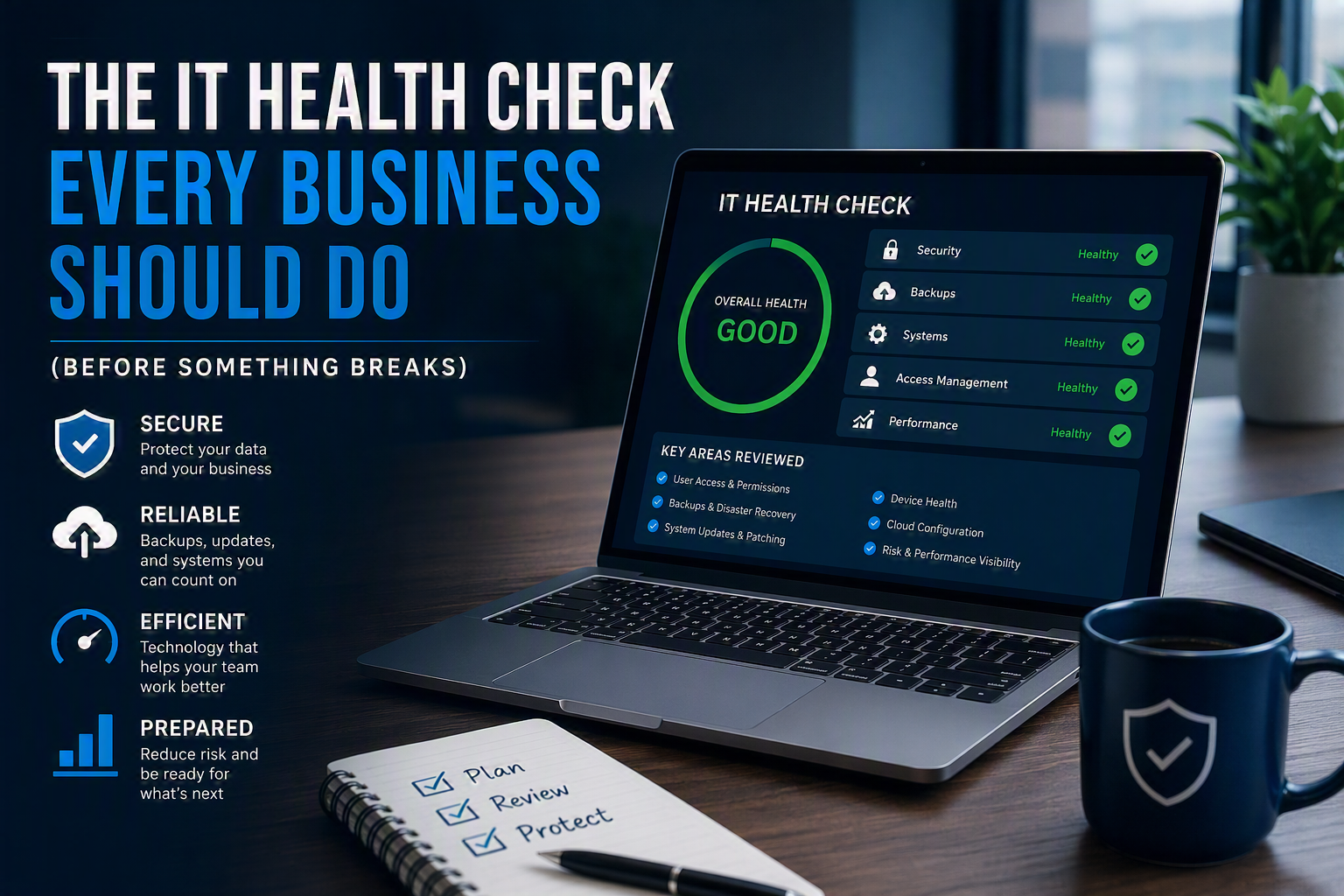
Healthy IT isn’t just working technology—it’s reliable, secure, and well-managed systems that support your team without disruption.
A healthy environment includes:
- Secure user access and permissions
- Tested and reliable backups
- Up-to-date systems and devices
- Consistent onboarding and offboarding processes
- Properly configured cloud tools
- Visibility into risks and performance
If even one of these areas is weak or inconsistent, your business may be exposed.
5 Signs Your IT Might Not Be as Healthy as You Think
Many issues go unnoticed until they cause real impact. Watch for these common warning signs:
- Backups haven’t been tested recently
- Multi-factor authentication, or MFA, isn’t enforced across all systems
- Devices are aging or inconsistently replaced
- Employees regularly deal with slow or unreliable systems
- Onboarding or offboarding processes vary every time
These gaps may seem small individually—but together, they create significant risk.
The Hidden Risks Businesses Miss
Some of the biggest IT risks are the ones you don’t see:
- Backups running—but failing silently
- Former employees still having system access
- Too many users with administrative permissions
- Duplicate or disorganized cloud environments
- Unsupported or outdated software
These issues don’t usually trigger alarms. Instead, they surface during a failure, security event, or urgent business situation—when it’s already too late.
A Simple IT Health Checklist
A proactive review doesn’t need to be overly complex. Start with these core checks:
- Are backups monitored and regularly tested?
- Is MFA enabled for all critical systems?
- Are users’ access levels reviewed and appropriate?
- Are devices tracked, current, and under warranty?
- Are systems patched and updated consistently?
- Are onboarding and offboarding processes standardized?
If you’re unsure about any of these, it’s a sign your IT environment could benefit from a deeper review.
Why Regular IT Reviews Matter
Your business doesn’t stand still—and neither does your technology.
New employees, new tools, evolving security risks, and changing business priorities all impact your IT environment. Without regular reviews, small gaps can grow into larger problems over time.
A monthly or quarterly IT review helps:
- Identify risks early
- Improve performance and reliability
- Align technology with business goals
- Reduce unexpected costs and downtime
Final Thought
Healthy IT isn’t about avoiding every issue—it’s about being prepared, proactive, and aware of where you stand.
Most businesses don’t realize where their risks are until something goes wrong. An IT health check gives you clarity before that happens.
If you haven’t reviewed your IT recently, now is a good time to take a closer look.